From field failures to training data to better models

Today we’re launching Automations and Datasets. Automations put AI agents to work triaging incidents across more robot data than any one team can review. Datasets turn those failures into versioned training sets you can trace from any model back to the data behind it. Together, they help robotics teams turn what their robots do in the field into better models.
Robots now fail faster than teams can learn from them
Every robotics team I talk to is running into the same wall. Fleets are growing, and every robot generates hours of camera, lidar, and sensor data a day. The failures that matter most for the next model are rare, and they’re buried in that data. No team can hire enough engineers to review every incident.
If you can’t say what data trained a model, you can’t say why it got worse.
No two robotics teams train models the same way, and their pipelines shouldn’t look the same. But every pipeline needs the same foundation: data you can search, incidents you can triage, and a record of what trained each model. Teams shouldn’t have to build that foundation. They should be able to build on it.
What we’re launching
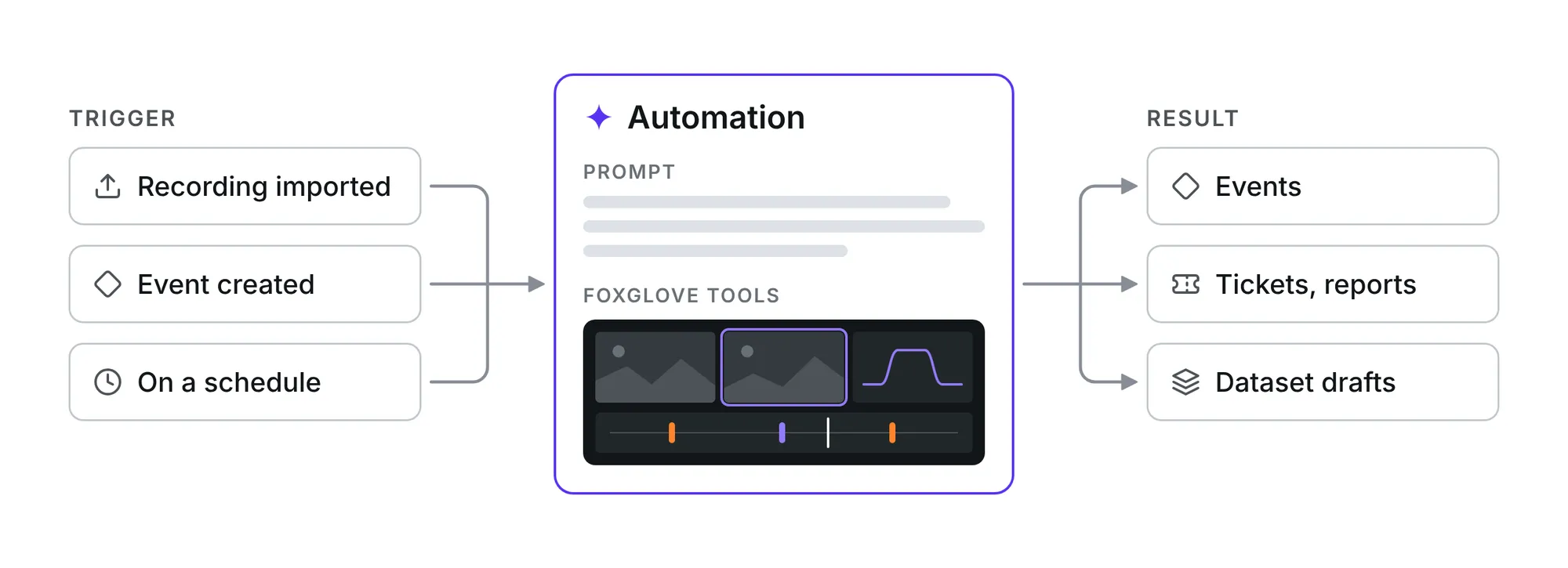
Triage Data: Automations. Automations puts AI agents to work triaging robot data as it arrives. Give an agent a task in plain language and a trigger: a new recording, a new event, or a schedule. It reviews the data, flags the failures and edge cases engineers need to see, and writes up its analysis for an engineer to assess. It can also add what it finds to a dataset for an engineer to review. Agents use the same tools engineers do in Foxglove, including rendering visualizations to check their work, and every run keeps a full record of each step the agent took. Engineers spend their time fixing problems, not finding them.
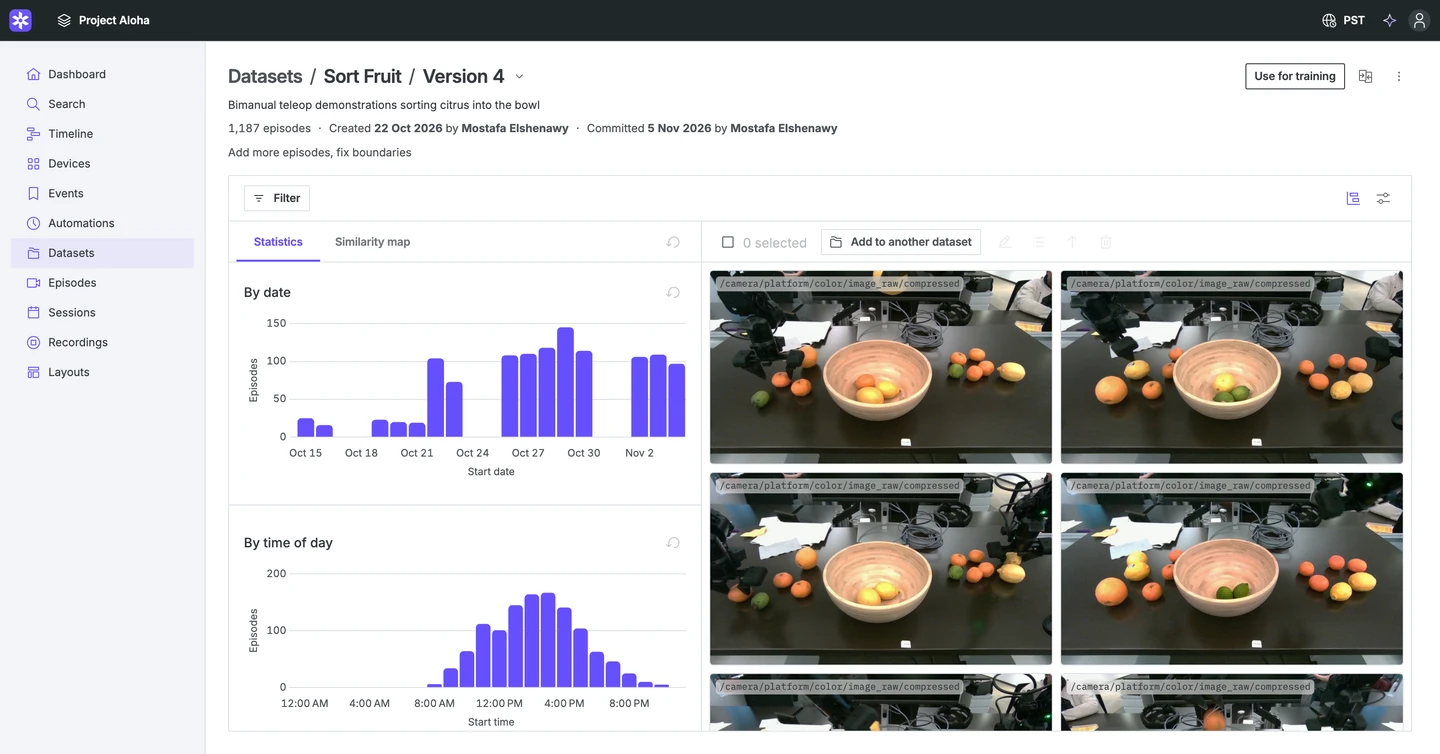
Train Data: Datasets. Datasets turn the moments that matter into versioned training sets, so every model traces back to the exact data it learned from. Build a training set from recordings or events, including the ones Automations flags, review each example in the visualizer, and commit a version that never changes. Datasets stream directly into PyTorch and Ray from object storage, with no export or conversion.
Build with Foxglove
No single company builds every piece of the robotics stack. Teams rely on a growing mix of models, frameworks, and simulation tools, and they keep their own training code and storage. Foxglove is the data layer that connects it all.
Inside Foxglove, each new product builds on what was already there. Datasets point at data already indexed in Foxglove, so building one never copies a byte. Automations use the same tools and visualizer engineers use every day, with their team’s layouts. The platform also keeps a record of the work. We built Automations because an agent reviewing robot data has to reason across many signals at once and show its work, so every run records each step it took. Every change to a dataset is attributed to the person or API key that made it.
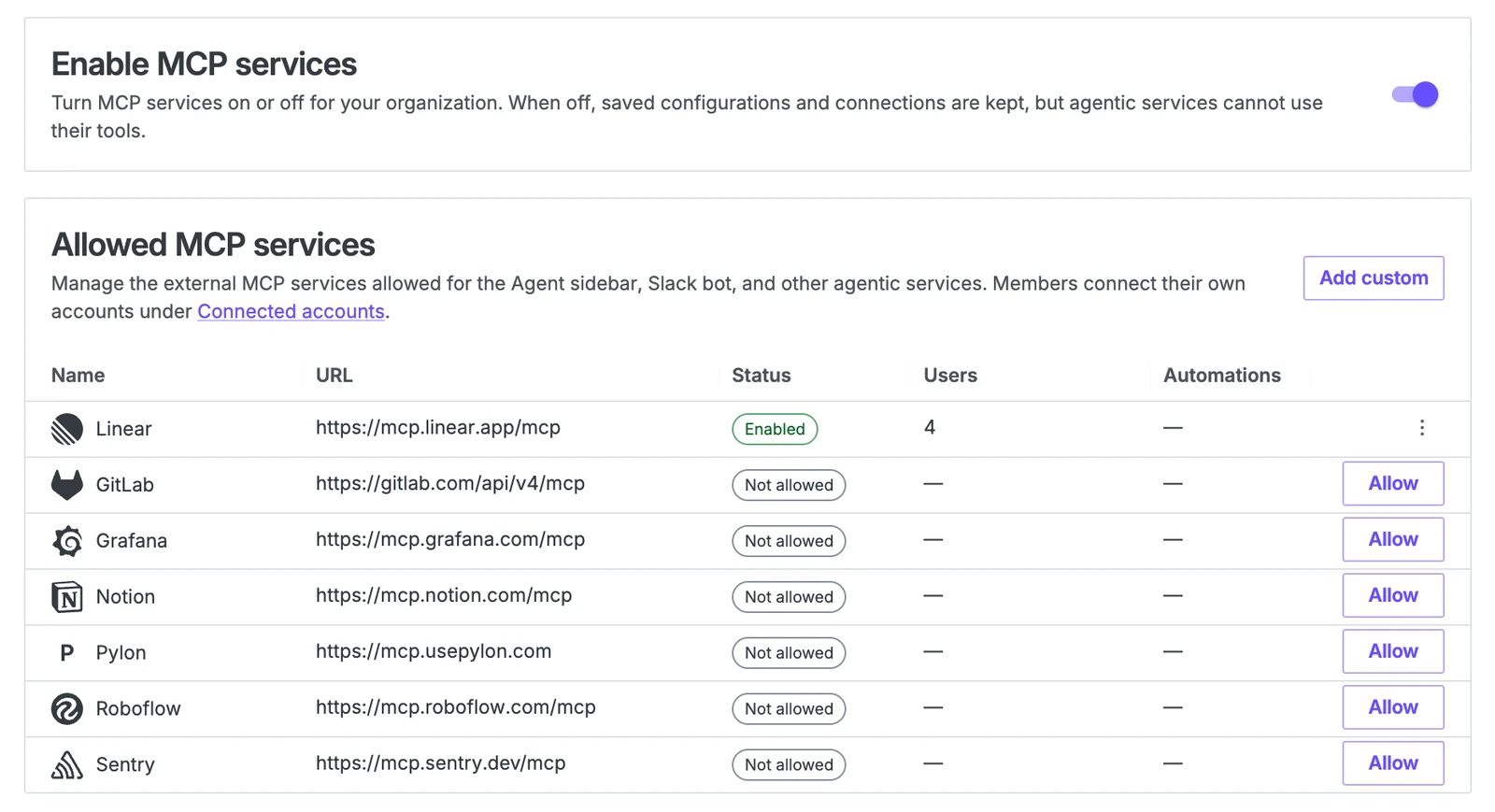
Beyond Foxglove, the platform is open in both directions. MCAP, the open-source robotics data format we created, is supported by Hugging Face’s LeRobot and NVIDIA Isaac, so data from simulation or the real world moves between tools without conversion. OAuth apps let teams build their own tools on Foxglove, like a labeling app or a training pipeline, with only the access each user grants. External MCP connections let Foxglove’s agent work in tools like Linear and GitHub, checking a related ticket before it flags something or filing the issue when it’s done.
That’s what we mean by building with Foxglove. Teams build the pipeline that fits their robots, and Foxglove handles the data layer underneath it. They get from raw robot data to a trained model faster, and with Bring Your Own Storage, the data never leaves their own cloud bucket.
Next, datasets will grow on their own as automations find new examples, and agents will take on more of the review. Engineers will still decide what goes into a model. They’ll just spend far less time getting it there, and every robot in the field will help make the next model better.
Get started
Automations and Datasets are available today.
Read more from the teams that built them: